How to Plan a Thailand Cycling Itinerary and Why Local Knowledge Matters
Thailand rewards the cyclist in ways that no other mode of travel quite matches. This article maps the country's four main cycling regions, the mountainous North, the historic Central plains, the River Kwai corridor around Kanchanaburi, and the coastal South, and explains what makes cycle touring in Thailand a genuinely different kind of active travel in Asia. It also addresses the question of responsible tourism directly: why it matters here, and what it looks like in practice.

In Thailand, the bicycle changes the journey. The pace drops, the landscape opens up, and the country stops performing for you. Villages appear without warning. A family waves you in for food. A road you weren't expecting turns out to be the best one you've taken all week.
Cycling tours in Thailand offer you genuine contact with the country, something that a bus window or a hire car never can.
Thailand unfolds as a mosaic of landscapes built for cycle touring. Forest-clad mountains, shimmering rice paddies, coastal fishing villages, and UNESCO-listed ruins sit within a few days of each other on any serious Thailand cycling itinerary. Each region has its own character and rhythm, offering a distinct reason to drop the anchor and explore.
The North: Where the Road Climbs and the Views Earn Their Keep
The provinces of Chiang Mai, Chiang Rai, and Mae Hong Son are the natural home of challenging Thailand scenic cycling routes. Roads wind through mountain passes and valleys. Names like Doi Suthep and Doi Inthanon carry weight with experienced cyclists for good reason.
E-bikes have made some of these climbs accessible to a broader range of riders, though Thailand's gradients will humble anyone who hasn't done their research in advance. Guided cultural cycling tours through the Golden Triangle combine legendary ascents with lush forest riding and visits to communities where traditional ways of living are still intact and still fragile.
Chiang Mai itself has grown into one of Southeast Asia's most compelling bases for cycling and cultural holidays. The city's artisan quarters, coffee scene, and surrounding countryside make it easy to spend several days without covering the same road twice.
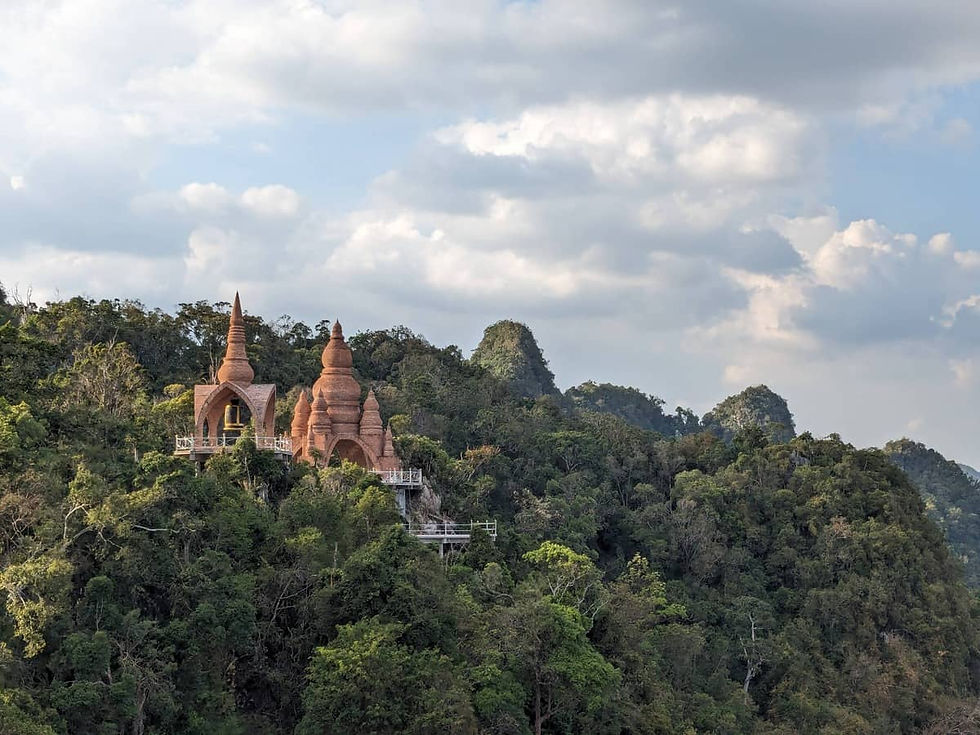
The Central Region: History at Pedalling Speed
Around Sukhothai and Ayutthaya, cycling becomes a journey through time. Roads are flat and quiet, often running alongside temple complexes and UNESCO-listed ruins. This is one of the most accessible areas in Thailand for a casual cycling tour: families, beginners, and travelers who want culture without physical strain will find everything they need here.
The real discoveries come when you push past the main sites. Rice fields that shift color with the seasons. Village markets operating on their own schedule. Rural tracks that appear on no official map. This is the off-the-beaten-path Thailand travel that the region quietly offers to anyone willing to turn off the main road.
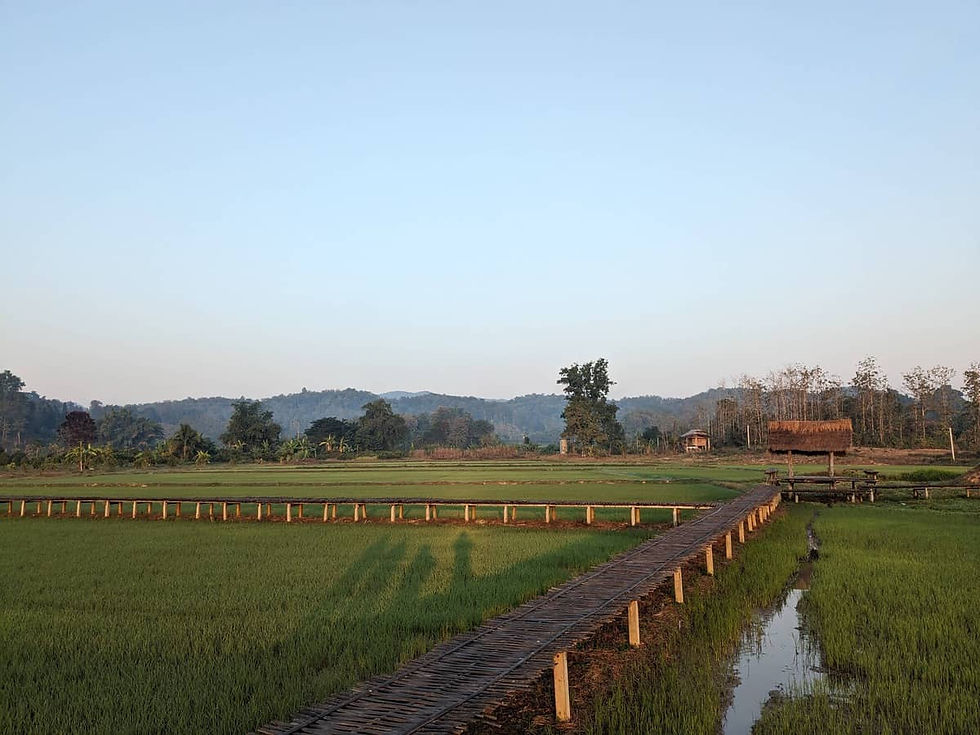
Kanchanaburi and the River Kwai Corridor: History, River, and Rainforest
Often overlooked on Thailand cycling itineraries focused on the north or south, Kanchanaburi rewards those who make time for it. The landscape shifts noticeably here: rivers, waterfalls, and forested hills frame a region whose history carries weight. Cycling through this area asks for a certain attentiveness, and it gives a great deal back.
The roads are quiet, the terrain is varied, and the density of significant sites per kilometre is hard to match anywhere else in central Thailand. For travelers building a multi-region cycling route, Kanchanaburi connects naturally to Bangkok and serves as an unhurried transition point between the capital and the north.
Ready to discover Kanchanaburi?
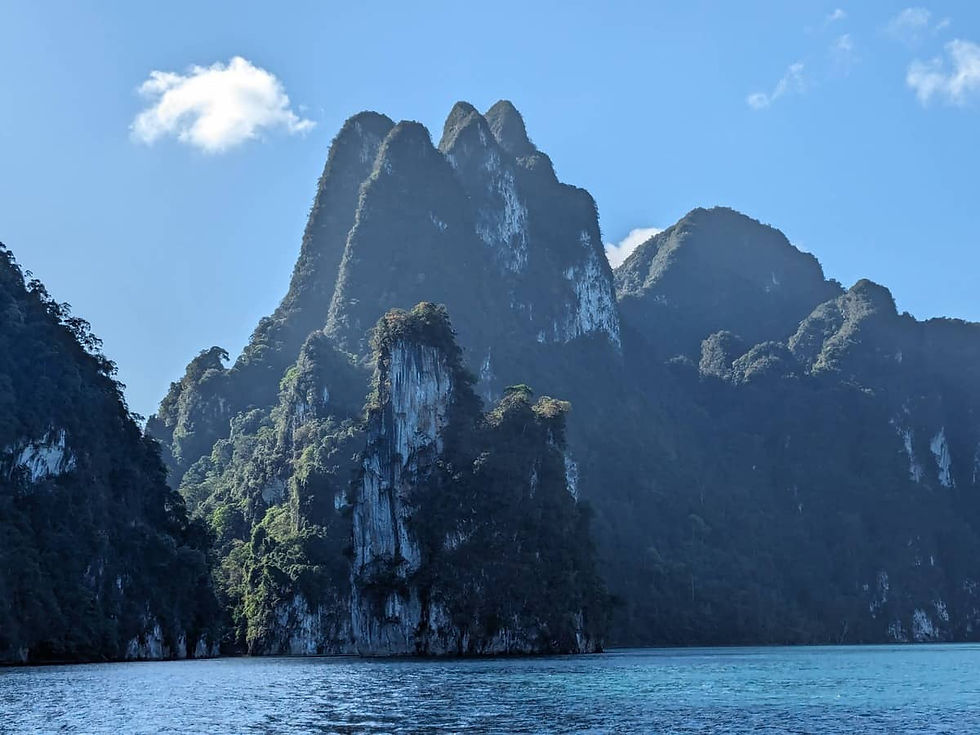
The South: Coastal Thailand Between Sea and Plantation
Along Coastal Thailand and the Gulf of Thailand, the riding takes on a different quality. Provinces like Prachuap Khiri Khan, Trang, and Phang Nga offer routes shaped by the sea: untouched beaches, rubber and coconut plantations, and small fishing communities that have little interest in performing for tourists.
The South's depth goes further inland than most itineraries acknowledge. Crossing from the Andaman coast to the Gulf of Thailand takes you through Khao Sok National Park, where rainforest-covered mountains replace the seascape entirely. Swapping the bike for a boat on Cheow Lan Lake or walking into the jungle at first light are the kinds of detours that don't show up in the headline itinerary but tend to be what travelers remember most.
This constant variation is what makes southern Thailand one of the richest areas for hidden gems cycling in Thailand: the landscape keeps changing, and the authentic encounters remain reliably rich.
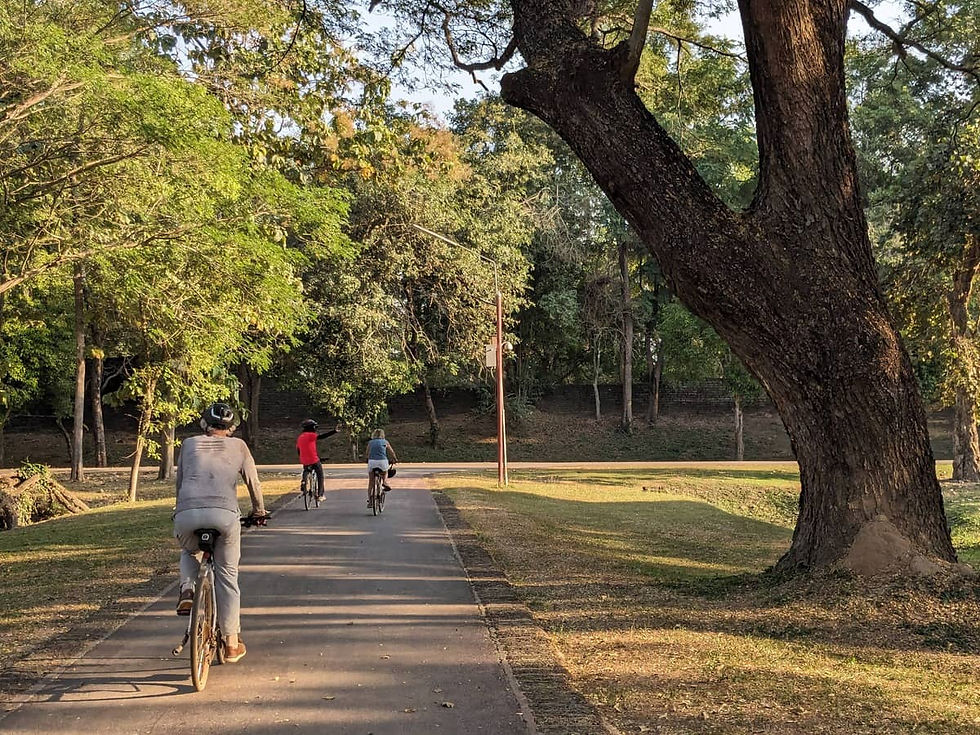
Planning a Thailand Cycling Itinerary That Works
The Tourism Authority of Thailand has invested in marked routes and organised cycling events in recent years. In practice, the best experiences still come from working with people who know the roads on the ground. A specialist cycling tour operator can build a Thailand cycling itinerary that matches your pace, your interests, and your available time, with support infrastructure that makes the difference between a hard day and a genuinely bad one.
Whether you're looking for a cultural cycling tour across Asia that covers multiple regions, or a single-region holiday focused on Chiang Mai or the coast, the planning decisions that matter most are the ones that happen before you arrive.
Are you ready to discover Thailand by bike?
Riding in Thailand means accepting that you won't see everything. What you'll see instead, you'll see properly. Sunrise over a temple you had entirely to yourself. A meal you didn't plan for, at a table you were invited to. A road that turned out to be the reason you came.
The country has a way of rewarding that kind of patience.
Ready to plan a cycling tour in Thailand that fits your pace and values?
FAQ
What level of fitness do I need for cycling tours in Thailand?
It varies significantly by region. For example: The Central plains around Sukhothai are well suited to casual cyclists and families. The North, particularly around Chiang Mai and Chiang Rai, involves real climbing and suits riders with some experience. E-bikes have broadened access to mountain routes, but gradients here are not trivial. LocalRoutes offers tours across all levels, and we will match you directly to the right route
What is the best time of the year to cycle in Thailand?
November to February is generally considered the most comfortable window: dry, cooler temperatures, and clear skies across most regions. The south has its own weather logic, with the Andaman and Gulf coasts operating on different seasonal patterns. The specific timing matters, and it's worth discussing your preferred region before booking.
Can families cycle in Thailand together?
Yes, particularly in the Central region around Sukhothai and Ayutthaya, and in certain parts of Coastal Thailand. These routes are flat, manageable, and rich in places worth stopping. Local Routes runs family cycling holidays in Thailand designed around pace and engagement for mixed groups.
How is a self-guided tour different from a guided one in Thailand?
A guided tour provides a local guide who navigates, translates, and opens doors that would otherwise stay closed. A self-guided tour gives you GPS routes, pre-arranged accommodation, and support logistics without someone riding beside you each day. Both work well in Thailand depending on your preference for independence and cultural access.
Is cycling in Thailand genuinely sustainable?
More so than most alternatives. The carbon footprint is low, the spending pattern favors local economies, and the mode of travel naturally routes you away from overvisited areas. That said, the choices you make within a cycling trip still matter: where you stay, who operates your tour, and which communities you support all carry weight.


